


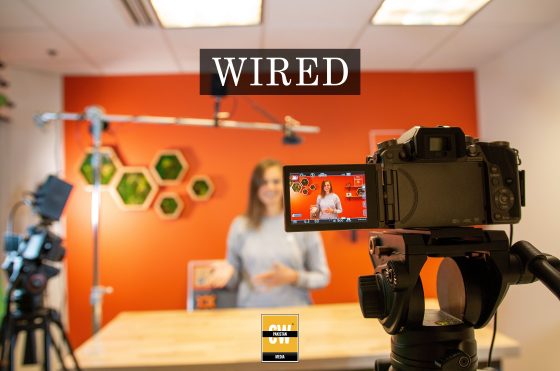














Muzaffar Manghi, co founder of Farmdar Technologies, has responded to a question he says he hears repeatedly while travelling and meeting new businesses: “Where is the AI revolution in agriculture?” In his first vlog, Manghi addressed the query directly, describing it as “a relevant question that deserves a clear answer,” and used the opportunity to explain why the impact of artificial intelligence in farming is often less visible to the public than other forms of technology. He also invited viewers to continue the conversation in the comments, positioning the discussion as an ongoing dialogue around how agri tech is evolving in real markets.
Manghi noted that when he introduces Farmdar as an AI based agri and space tech insights company, many people expect something immediately noticeable, similar to the everyday experience of interacting with OpenAI’s ChatGPT or seeing new features appear on social platforms. “Quite simply, unlike using ChatGPT and that becoming a common conversation, AI in agriculture is not always visible,” he said. According to him, one of the main reasons is the sheer scale of agriculture worldwide. Farmdar and similar firms scan entire countries multiple times a year using satellite imagery and advanced analytics, producing insights that agribusinesses rely on. Yet even monitoring several countries represents only a small portion of global farmland, which makes progress harder to perceive from the outside despite significant activity taking place behind the scenes.
He further explained that the primary beneficiaries of these systems are often enterprise leaders rather than consumers. The data generated by AI models is typically used by CEOs, CFOs, and procurement heads to guide sourcing, forecasting, and risk management decisions. “The people who are really seeing the impact are happening behind closed doors,” he said, adding that the visibility and talkability of these outcomes are therefore limited, often confined to professional platforms or industry events. Because the tools support internal operations rather than public facing services, their value is real but not always obvious to the broader market.
Another important factor, Manghi added, is the time it takes to measure results in agriculture. Unlike digital services where performance can be judged within minutes, farming operates on seasonal cycles. Yield predictions or productivity reports can only be verified after an entire crop season and harvest. “In order to see if our yield prediction reports were accurate, you have to wait through the entire season,” he explained, noting that this slower validation process reduces how quickly success stories spread. For Manghi, these dynamics mean the AI shift in agriculture is already underway across millions of hectares, but its impact is gradual, data driven, and embedded in long term operations rather than immediate and highly visible, which is why the transformation may feel quieter even as adoption continues to expand.
Follow the SPIN IDG WhatsApp Channel for updates across the Smart Pakistan Insights Network covering all of Pakistan’s technology ecosystem.