The internet is now Pakistan’s digital central nervous system. It runs under our streets in fibre, blinks in quiet corners of exchanges, hums from towers on city rooftops and mountain ridges, and keeps the country going while most of us scroll past without thinking about it. You only really see it when it fails. A job interview that freezes mid-sentence. A QR payment that refuses to go through at the worst possible moment. A fibre cut that suddenly kills your banking app, your food delivery, your office VPN and half your workday in one go. In 2026, on World Telecommunication and Information Society Day, celebrated on 17th May, the rest of the world is finally calling these invisible connections what they are: digital lifelines. And this year’s theme – “Digital lifelines: Strengthening resilience in a connected world” – might as well be describing an ordinary day in Pakistan.
World Telecommunication Day started as a very 19th-century idea: a formal anniversary for the first international telegraph convention. Think copper wires, Morse code and men in waistcoats sending dots and dashes across continents. Over time, the technology changed but the basic idea didn’t. Telegraph became telephone. Analogue turned digital. Copper gave way to fibre. Voice calls turned into video, chat apps and endless feeds. Pakistan has lived that entire journey in fast-forward: from begging for a fixed line and waiting weeks, to buying a cheap SIM on a street corner, to running a mini-business from a single smartphone. Today there are well over a hundred million mobile broadband users in the country, with industry forecasts expecting tens of millions more internet users by the end of this decade. World Telecom Day 2026 flips the question on us: if these connections are now basic infrastructure, do we treat them with the same seriousness as roads, bridges and power?
Look at a normal day in Karachi, Lahore, Islamabad, Peshawar or Quetta. A ride-hailing driver’s income depends on a stable data signal and an app backend they never see. A shopkeeper in a crowded bazaar happily takes digital payments because it means less cash to count—until the app spins, the network stutters and the queue gets angry. Students bounce between online lectures, university portals, YouTube explainers and WhatsApp study groups, stitching together an education that is half campus and half cloud. Freelancers in smaller cities push designs, code and content to clients they will never meet in person, then wait for a payment notification on the same phone. Even government work has quietly slipped online: WhatsApp groups instead of memos, video calls instead of endless travel, shared folders instead of dusty files. Underneath all this is one quiet assumption: the network just works. When it doesn’t, everything suddenly feels fragile.
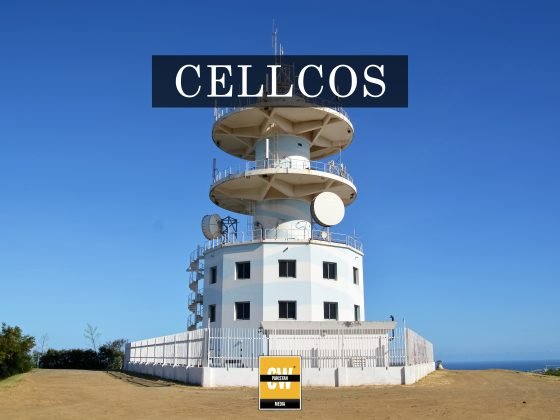
Behind that “it just works” illusion is an entire cast of characters. On the front line are the cellular operators blanketing most of the country in signal bars, turning cheap Android phones into banks, classrooms and offices. Alongside them, internet service providers trench streets, hang fibre on poles and wire up homes and offices, deciding whether your workday call is smooth or painful. Fixed-line and DSL networks, though older, still carry voice, connect businesses and in some localities provide the only stable link when wireless is overloaded. Together, these cellcos, ISPs and fixed-line providers are the people keeping Pakistan’s nervous system firing. Their network operations centres watch dashboards of blinking alerts, reroute around fibre cuts, guess where demand will spike and send field teams out with spools of cable and generators when something goes wrong. On paper, analysts talk about “digital infrastructure as an asset class” with towers, fibre and data centres attracting long-term investors; on the ground, it looks like a lineman on a pole in the heat, trying to get your connection back before the next storm.
Around them sit the institutions that shape the rules of the game: the Pakistan Telecommunication Authority and the Ministry of IT and Telecom. PTA is the referee and traffic cop. It decides who can operate, how spectrum is used, what level of service people have a right to expect, and how to keep competition alive without killing long-term investment. When PTA gets it right, you don’t notice it; you just see more coverage, better prices and fewer dropped calls. When it gets it wrong, you feel it in slow rollouts and patchy networks. MoITT is the architect trying to draw the bigger picture: “Digital Pakistan”, “Digital Nation”, national stacks and data-sharing layers, laws on cybersecurity and data protection, policies for new cables and satellites. Industry reports talk about the sector carrying billions of dollars in cumulative Capex and still needing more for 4G densification, 5G trials, fibre-to-the-home and data centres. When the state treats telecoms as a source of quick cash, networks get fragile. When it treats them as critical infrastructure and a public good, everything else—investment, innovation, reliability—gets easier.
Then there is the Universal Service Fund, the least flashy but most important mechanism for making sure digital lifelines don’t stop at the city bypass. Paid for by a slice of operator revenues and run under MoITT, USF’s job is simple and hard at the same time: get real connectivity into places the market would ignore. That means subsidising towers in remote tehsils, fibre along lonely highways, links to schools, health centres and community sites that no commercial business case would touch on its own. Cellular operators, ISPs and other providers bid for these projects; USF helps make the numbers add up. The result is that a village or small town that never made it to a glossy coverage map suddenly has a working signal, or even fibre. No ribbon cuttings, no big speeches—just another piece of the nervous system quietly coming online.
Now imagine all of this under stress, because Pakistan doesn’t live in a calm climate or a calm economy. We’ve seen rivers tear through districts, heatwaves push the grid to breaking point, earthquakes rattle buildings and roads that were never designed for this much pressure. In those moments, connectivity stops being about memes and movies. A flood warning that reaches your phone in time can move a family out of danger. A health worker in a cut-off area needs at least one functioning channel—call, SMS, data—to consult a doctor in a city. Relief teams rely on maps, group chats and shared sheets to decide where boats, food and medicine go next. When primary fibre is underwater or towers are down, satellite links, microwave hops and surviving copper lines become the only lifelines. The decisions that cellcos, ISPs, landline providers, PTA, MoITT and USF made months or years earlier—about backup power, redundant routes, disaster-prone districts, coverage obligations—suddenly show up as either chaos or coordination on the ground.
Resilience isn’t only about big disasters, though. It’s also about the slow grind of daily shocks. Digital payments and branchless banking have quietly become part of how people manage risk: a worker abroad sends money home in seconds; a kiryana owner accepts QR payments when cash is short; a student keeps up with classes through low-bandwidth content when travel is expensive. These systems run on the same telecom and internet rails. The market numbers behind them are huge—hundreds of millions of SIMs, data usage growing at double-digit rates every year, yet average revenue per user stuck stubbornly low, which means networks are heavily used but not always strongly funded. When the rails are up, they soften the blows of a tough economy. When they’re down, the blows land harder. A bad outage isn’t just “no YouTube for a few hours”—it can mean missed wages, delayed remittances, stalled medical advice, lost work.
There’s also the question of who actually gets to hold these digital lifelines. Coverage maps look impressive, but a full-strength signal doesn’t mean much if you don’t have your own device, can’t afford more than a tiny data bundle, or don’t feel safe online. In many households, especially outside big cities, a single shared phone is still normal. Social rules and safety fears mean many women’s access is borrowed or monitored. For people with disabilities, badly designed apps and websites turn simple tasks into daily battles. Fixing that requires more than one hero. It needs MoITT to write inclusion into policies, PTA to enforce fair treatment and basic protections, USF to fund community access points and school connectivity, and operators—mobile, fixed, ISP—to design products and support for people who aren’t already power users. Industry analysts like to describe Pakistan as “under-penetrated” in fibre and fixed broadband; for the people on the wrong side of that phrase, it simply means they are still waiting for their first real, reliable connection.
Layered on top of all this hardware and policy is the software world, where resilience gets subtle. Pakistan’s digital life increasingly runs through cloud platforms, shared payment rails, AI-powered risk engines, identity and login systems. Cellcos and ISPs aren’t just carrying traffic anymore; they bundle apps, run content caches, expose APIs, and partner with fintechs, ed-techs and streaming platforms. When a shared piece of that stack fails or is attacked, the impact fans out. A bug in a fraud system can quietly lock thousands of people out of their own money. A bad update can take down multiple government portals at once. A serious cyberattack can look, to users, exactly like a storm or a power cut: everything just stops working. That’s why the 2026 theme talks about lifelines and resilience in the same breath. Perfection is impossible. Preparing for failure—and recovering fast—is the only way forward.
So what would a more resilient, fair, human-centred digital Pakistan actually feel like? It would mean treating the lone tower serving a handful of villages with the same seriousness as the cluster covering a wealthy neighbourhood, because in a flood that lonely site might be the only one left standing. It would mean PTA baking continuity and redundancy into licences instead of only worrying about price wars. It would mean MoITT pushing every ministry that launches an app to also plan for what happens when that app, or the network underneath it, goes down. It would mean USF continuing to drag fibre and towers into places no shareholder presentation cares about—but every citizen there will remember. It would mean operators and ISPs investing not only where the short-term returns are obvious, but where the long-term stability of the whole system demands it.
Most of all, it would mean all of us taking our digital lifelines a little more seriously. You don’t need to know how routing protocols work, or be able to draw an org chart of who does what in Islamabad. But it’s worth asking yourself every now and then: if the network went dark for a week, what would break in my life? How would I reach the people I love? How would I get to my money? How would I keep working or studying? That moment of imagined silence is exactly why World Telecom Day 2026 matters for Pakistan. It’s a reminder that our future now runs on signals we can’t see, managed by people and institutions we rarely think about—and that building stronger, fairer, more resilient digital lifelines is no longer a tech issue. It’s how the country stays alive, and how it gives everyone an equitable chance to plug into what comes next.
Follow the SPIN IDG WhatsApp Channel for updates across the Smart Pakistan Insights Network covering all of Pakistan’s technology ecosystem.