
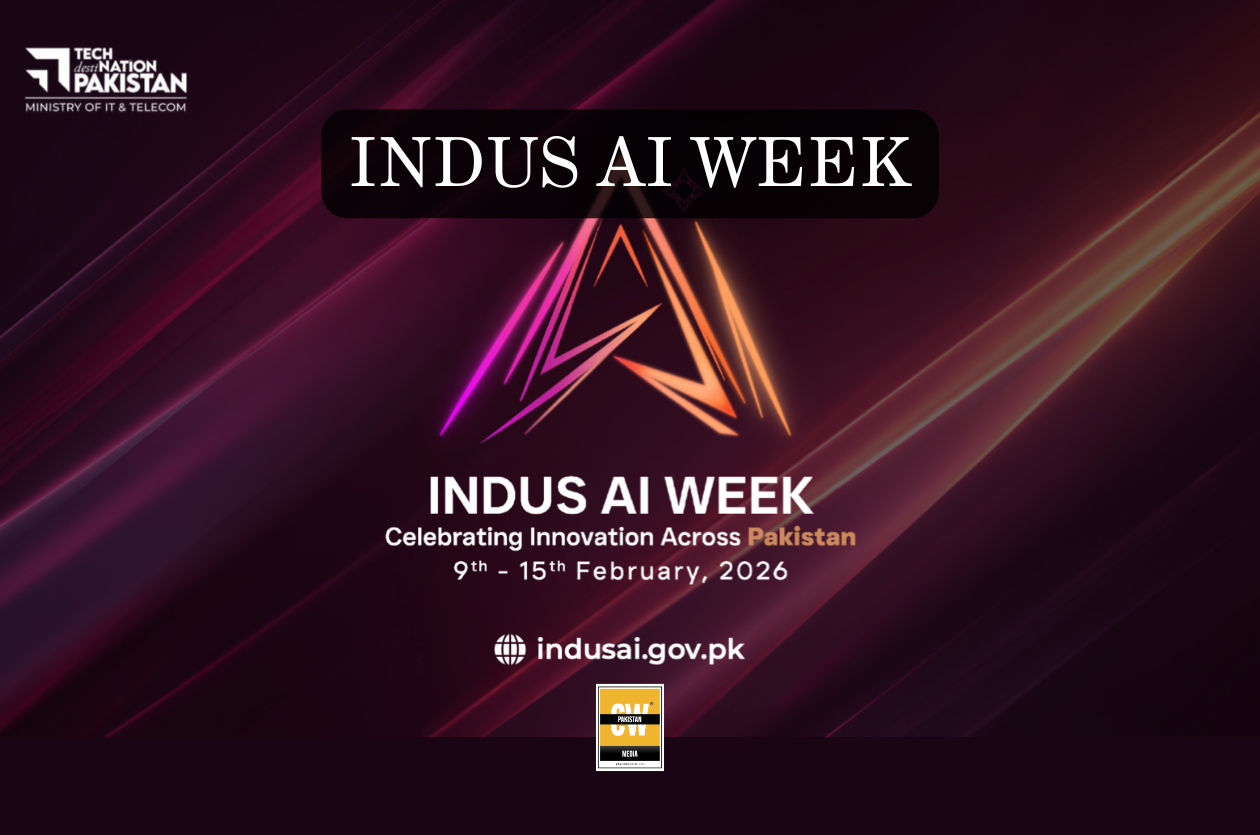
The Indus AI Summit 2026 concluded at Jinnah Convention Center in Islamabad, bringing together policymakers, global technology experts, investors, and industry leaders to outline Pakistan’s national direction for artificial intelligence. Organized by Ministry of Information Technology and Telecommunication, the summit served as the strategic anchor of Indus AI Week taking place from 9 to 15 February. Prime Minister Muhammad Shehbaz Sharif attended as Chief Guest alongside Federal Minister for IT and Telecommunication Shaza Fatima Khawaja, signaling strong government backing for artificial intelligence as a national development priority. Details about the broader program are available at indusai.gov.pk.
Throughout the day, discussions focused on translating Pakistan’s AI ambitions into actionable policies and measurable outcomes. Delegates engaged in high-level dialogue on governance models, international collaboration, and the practical strengthening of the national AI ecosystem. In his address, Prime Minister Shehbaz Sharif described artificial intelligence as a cornerstone of national progress rather than a distant technological concept. He stressed that Pakistan must actively participate in shaping the global AI landscape instead of remaining a passive observer. By cultivating innovation, encouraging responsible adoption, and enabling local talent, the government aims to create a technology-driven economy that supports youth employment and sustainable growth across sectors.
To accelerate this transition, the Prime Minister announced several major initiatives aimed at building a future-ready digital economy. Pakistan has committed to investing 1 billion dollars in AI by 2030 to develop sovereign computing infrastructure and expand research capabilities. Education reforms will introduce AI curriculum in federal schools and institutions across AJK, Gilgit Baltistan, and remote areas of Balochistan. The government also plans to provide 1,000 fully funded PhD scholarships in artificial intelligence by 2030 while launching a nationwide program to train one million non IT professionals in AI skills. These measures are intended to broaden workforce readiness and ensure that AI adoption benefits multiple industries beyond the technology sector.
Federal Minister for Planning, Development, and Special Initiatives Prof. Ahsan Iqbal linked AI integration with the broader Uraan Pakistan vision for economic transformation, emphasizing stronger alignment between academia and industry to drive exports and job creation. Shaza Fatima Khawaja highlighted the strategic importance of digital sovereignty and outlined ongoing initiatives such as full e-office adoption across federal divisions and the establishment of high-performance computing foundations. She also welcomed international partnerships to strengthen technical capacity and position Pakistan as a credible player in the global technology landscape. A key moment of the summit was the announcement of the Islamabad Declaration, a policy document defining principles for sovereign AI, data protection, accountability, safe and explainable systems, inclusive innovation, and private sector participation.
The event featured addresses and dialogues with international and local experts including representatives from Smart Dubai, Türkiye’s Ministry for Industry and Technology, University of Alberta, PTCL and Ufone, Jazz, Chinese Academy of Sciences, Dfinity, Pakistan Digital Authority, and other research and investment organizations. Sessions covered governance at scale, AI-native government design, data policy, financing mechanisms, ecosystem building, and trust in intelligent systems. The summit concluded with discussions on the next steps for sustaining momentum, after which activities shifted to the Innovation, Learning, and Engagement Arena at Islamabad Sports Complex where students, startups, and the public will participate in hands-on demonstrations. Indus AI Week continues nationwide through February 15, reinforcing Pakistan’s structured approach to artificial intelligence through policy execution, skills development, and global collaboration.
Follow the SPIN IDG WhatsApp Channel for updates across the Smart Pakistan Insights Network covering all of Pakistan’s technology ecosystem.