CW Pakistan
  • Legacy
    • Legacy Editorial
    • Editor’s Note
  • Academy
  • Wired
  • Cellcos
  • PayTech
  • Business
  • Ignite
  • Digital Pakistan
  • PSEB
    • DFDI
    • Indus AI Week
  • PASHA
    • CEC Elections 2026
  • TechAdvisor
  • GamePro
  • Partnerships
  • PCWorld
  • Macworld
  • Infoworld
  • TechAdvisor
0
0
0
0
0
Subscribe
CW Pakistan
CW Pakistan CW Pakistan
  • Legacy
    • Legacy Editorial
    • Editor’s Note
  • Academy
  • Wired
  • Cellcos
  • PayTech
  • Business
  • Ignite
  • Digital Pakistan
  • PSEB
    • DFDI
    • Indus AI Week
  • PASHA
    • CEC Elections 2026
  • TechAdvisor
  • GamePro
  • Partnerships
  • Global Insights

Germany Researchers Create 3D Global Building Atlas Covering 2.75 Billion Structures

  • December 12, 2025
Total
0
Shares
0
0
0
Share
Tweet
Share
Share
Share
Share

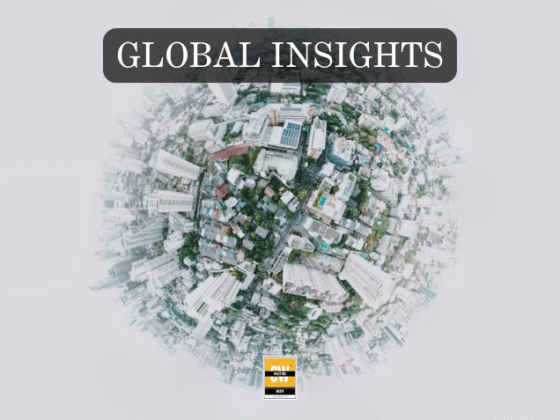
Scientists in Germany have developed the most comprehensive digital representation of the world’s man-made environment, creating a 3D dataset that maps 2.75 billion buildings globally. The GlobalBuildingAtlas, created by researchers at Technical University of Munich (TUM), represents a major step forward in urban modeling and climate research, while also supporting the implementation of UN Sustainable Development Goals. Funded through an ERC Starting Grant, the project leverages satellite imagery from 2019 and offers a resolution thirty times higher than previous global building maps, which had identified approximately 1.7 billion structures. Xiaoxiang Zhu, PhD, professor and chair of Data Science in Earth Observation at TUM, who led the initiative, said the dataset is expected to improve urbanization models, disaster management strategies, and infrastructure planning, helping cities become more inclusive and resilient.

Each building in the atlas is modeled at a resolution of 9.8 by 9.8 feet, allowing for precise calculations of height, volume, and structural density. About 97 percent of the mapped buildings are Level of Detail 1 models, simplified three-dimensional representations that capture the essential geometry of structures. While not as detailed as higher-level models, these LoD1 representations can be integrated at scale into computational frameworks, offering a robust foundation for urban analysis, volume estimation, and infrastructure planning. Unlike prior datasets that focused primarily on wealthier urban areas, this project provides comprehensive coverage across previously underrepresented regions, including Africa, South America, Southeast Asia, and rural areas worldwide. Zhu explained that 3D data allows for a more accurate understanding of urbanization patterns and living conditions compared with traditional 2D maps, offering insights into social and economic disparities.

The atlas also introduces a new metric, building volume per capita, which measures total building mass relative to population. This indicator is intended to guide sustainable urban development and help cities address issues of inequality, by identifying areas in need of housing, public facilities, or green infrastructure. Beyond urban planning, the dataset plays a significant role in climate adaptation efforts, improving energy demand modeling, CO2 emission estimates, and green infrastructure planning. The high-resolution 3D maps also enhance disaster preparedness by allowing authorities to assess risks from natural events more quickly and accurately.

Global interest in the project is already growing. German Aerospace Center (DLR) is exploring applications of the dataset for the International Charter: Space and Major Disasters, which coordinates satellite data to support emergency response worldwide. Researchers note that the atlas will provide governments, urban planners, and scientists with the tools needed to make data-driven decisions, optimize infrastructure, and create more equitable, resilient urban environments. By combining precision mapping with practical applications, the GlobalBuildingAtlas sets a new benchmark in digital urban modeling and international collaboration in Earth observation.

Source

Follow the SPIN IDG WhatsApp Channel for updates across the Smart Pakistan Insights Network covering all of Pakistan’s technology ecosystem. 

Share
Tweet
Share
Share
Share
Related Topics
  • 3D Building Data
  • Climate Research
  • disaster management
  • ERC Starting Grant
  • GlobalBuildingAtlas
  • remote sensing
  • sustainable development
  • Technical University of Munich
  • urban planning
  • Xiaoxiang Zhu
Next Article
  • Digital Pakistan

PTA Cracks Down On Unauthorized SIM Issuances In Sheikhupura

  • December 12, 2025
Read More
Previous Article
  • Business

Systems Limited Approves Acquisition And Merger With Confiz Pakistan

  • December 12, 2025
Read More
You May Also Like
Read More
  • Global Insights

Saudi Arabia Advances AI Development Through UNESCO Global Forum on Ethical AI Governance

  • CWPakistan
  • September 18, 2026
Read More
  • Global Insights

Space42 And Viasat Commit Up To US 1 Billion Dollar For Satellite Connectivity Platform

  • CWPakistan
  • September 16, 2026
Read More
  • Global Insights

UN Marks International Day Of Science Technology Innovation For South

  • CWPakistan
  • September 16, 2026
Read More
  • Global Insights

Google DeepMind Launches WeatherNext 3 AI Model For Hourly Global Weather Forecasts

  • CWPakistan
  • September 16, 2026
Read More
  • Global Insights

ASEAN Digital Economy Outlook 2026 Identifies Barriers to Seamless Digital Cross-Border Trade

  • CWPakistan
  • September 15, 2026
Read More
  • Global Insights

China Tightens Overseas Travel Rules for Citizens Under New National Security Regulations

  • CWPakistan
  • September 15, 2026
Read More
  • Global Insights

US Raises Chinese Satellite Imagery Issue With Beijing Over Iran Attack

  • CWPakistan
  • September 14, 2026
Read More
  • Global Insights

GITEX Highlights Türkiye As A Global Hub For Artificial Intelligence Expansion

  • CWPakistan
  • September 12, 2026
Trending Posts
  • Pakistan Digital Authority Hiring Financial Analyst For Islamabad Position
    • September 20, 2026
  • HEC Chairman Meets China Ambassador Of Pakistan To Discuss University Ties
    • September 20, 2026
  • Bano Qabil Opens Registration For Cloud Computing And DevOps Course
    • September 20, 2026
  • PASHA CEC Election Results Introduce New Committee Members For 2026-2028
    • September 19, 2026
  • Computerworld Pakistan Partners With ITCN Asia Karachi 2026 To Cover AI, Innovation And Digital Transformation
    • September 19, 2026
about
CWPK Legacy
Launched in 1967 internationally, ComputerWorld is the oldest tech magazine/media property in the world. In Pakistan, ComputerWorld was launched in 1995. Initially providing news to IT executives only, once CIO Pakistan, its sister brand from the same family, was launched and took over the enterprise reporting domain in Pakistan, CWPK has emerged as a holistic technology media platform reporting everything tech in the country. It remains the oldest continuous IT publishing brand in the country and in 2025 is set to turn 30 years old, which will be its biggest benchmark and a legacy it hopes to continue for years to come. CWPK is part of the SPIN/IDG Wakhan media umbrella.
Read more
Explore Computerworld Sites Globally
  • computerworld.es
  • computerworld.com.pt
  • computerworld.com
  • cw.no
  • computerworldmexico.com.mx
  • computerwoche.de
  • computersweden.idg.se
  • computerworld.hu
Content from other IDG brands
  • PCWorld
  • Macworld
  • Infoworld
  • TechAdvisor
CW Pakistan CW Pakistan
  • CWPK
  • CXO
  • DEMO
  • WALLET

CW Media & all its sub-brands are copyrighted to SPIN-IDG Wakhan Media Inc., the publishing arm of NCC-RP Group. This site is designed by Crunch Collective. ©️1995-2026. Read Privacy Policy.

Input your search keywords and press Enter.