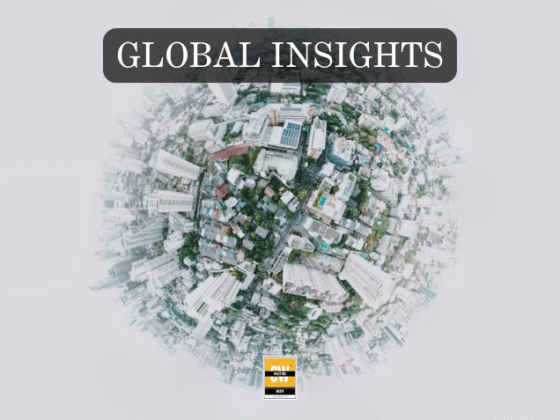

Scientists in Germany have developed the most comprehensive digital representation of the world’s man-made environment, creating a 3D dataset that maps 2.75 billion buildings globally. The GlobalBuildingAtlas, created by researchers at Technical University of Munich (TUM), represents a major step forward in urban modeling and climate research, while also supporting the implementation of UN Sustainable Development Goals. Funded through an ERC Starting Grant, the project leverages satellite imagery from 2019 and offers a resolution thirty times higher than previous global building maps, which had identified approximately 1.7 billion structures. Xiaoxiang Zhu, PhD, professor and chair of Data Science in Earth Observation at TUM, who led the initiative, said the dataset is expected to improve urbanization models, disaster management strategies, and infrastructure planning, helping cities become more inclusive and resilient.
Each building in the atlas is modeled at a resolution of 9.8 by 9.8 feet, allowing for precise calculations of height, volume, and structural density. About 97 percent of the mapped buildings are Level of Detail 1 models, simplified three-dimensional representations that capture the essential geometry of structures. While not as detailed as higher-level models, these LoD1 representations can be integrated at scale into computational frameworks, offering a robust foundation for urban analysis, volume estimation, and infrastructure planning. Unlike prior datasets that focused primarily on wealthier urban areas, this project provides comprehensive coverage across previously underrepresented regions, including Africa, South America, Southeast Asia, and rural areas worldwide. Zhu explained that 3D data allows for a more accurate understanding of urbanization patterns and living conditions compared with traditional 2D maps, offering insights into social and economic disparities.
The atlas also introduces a new metric, building volume per capita, which measures total building mass relative to population. This indicator is intended to guide sustainable urban development and help cities address issues of inequality, by identifying areas in need of housing, public facilities, or green infrastructure. Beyond urban planning, the dataset plays a significant role in climate adaptation efforts, improving energy demand modeling, CO2 emission estimates, and green infrastructure planning. The high-resolution 3D maps also enhance disaster preparedness by allowing authorities to assess risks from natural events more quickly and accurately.
Global interest in the project is already growing. German Aerospace Center (DLR) is exploring applications of the dataset for the International Charter: Space and Major Disasters, which coordinates satellite data to support emergency response worldwide. Researchers note that the atlas will provide governments, urban planners, and scientists with the tools needed to make data-driven decisions, optimize infrastructure, and create more equitable, resilient urban environments. By combining precision mapping with practical applications, the GlobalBuildingAtlas sets a new benchmark in digital urban modeling and international collaboration in Earth observation.
Follow the SPIN IDG WhatsApp Channel for updates across the Smart Pakistan Insights Network covering all of Pakistan’s technology ecosystem.