








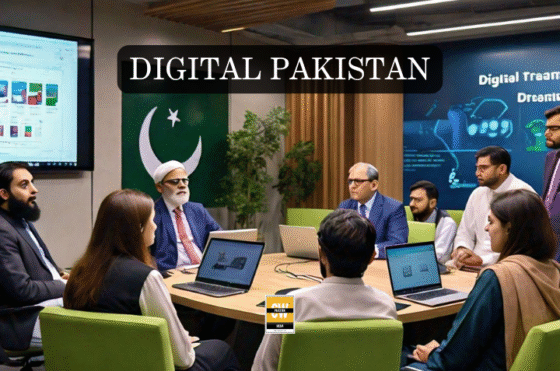










Pakistan has advanced its commitment to data-driven governance with the launch of the first fully digital Household Integrated Economic Survey for 2024–25. Federal Minister for Planning, Development, and Special Initiatives Ahsan Iqbal inaugurated HIES 2024–25 at the Ministry of Planning, Development, and Special Initiatives in Islamabad, highlighting the survey as a milestone in national planning. The event gathered senior officials, technical experts, and stakeholders from Pakistan Bureau of Statistics, emphasizing the government’s focus on leveraging technology for effective policy formulation. The release of survey results marks a major enhancement in the country’s national data ecosystem, offering detailed insights into social, economic, and digital trends across Pakistan.
According to HIES 2024–25 findings, Pakistan has seen notable improvements in literacy, internet access, and health indicators. National literacy increased from 60% to 63%, while the proportion of out-of-school children declined from 30% to 28%. Household internet penetration rose from 34% to 70%, with individual internet users climbing from 17% to 57%. Health metrics also improved, with full immunization coverage increasing to 73%, neonatal mortality dropping to 35 per thousand live births, and infant mortality falling to 47 per thousand. Total fertility rates decreased slightly to 3.6 children per woman, and access to clean energy sources, including natural gas, LPG, solar energy, and electricity, increased to 38%. Mobile or smartphone ownership reached 96% nationwide, reflecting a substantial leap in digital connectivity.
Education indicators showed progress with primary-level gender parity rising from 92% to 96%, though officials emphasized that challenges remain, including nearly 25 million children still out of school. Minister Ahsan Iqbal highlighted that Pakistan’s economy faced shocks in 2018 and 2022, and the COVID-19 pandemic further strained households, particularly the middle class. Despite these hurdles, he noted that the economy is now in a recovery phase, projecting approximately 4% GDP growth in the current fiscal year. He stressed that growth should be built on strong fundamentals, capacity building, and the findings of HIES, which provide evidence to guide inclusive policies.
HIES 2024–25 builds on earlier initiatives, including Pakistan’s digital population census, Digital Agriculture Census, and Economic Survey. Conducted across 32,000 households using an integrated ERP system, the survey allowed real-time monitoring and task management for field teams. Deputy Director General Ms. Rabia Awan presented survey insights, noting that household incomes and consumption patterns have increased. Food accounted for 37% of household spending, followed by housing and fuel at 26%. Expenditure on restaurants, clothing, and transport ranged from six to seven percent, reflecting evolving consumption trends. By tracking 31 of the 62 Sustainable Development Goal indicators, the survey strengthens Pakistan’s capacity to implement policies that promote equitable growth, digital inclusion, and improved social outcomes.
Officials emphasized that HIES 2024–25 provides a strong foundation for policy decisions, research, and private sector planning. By leveraging fully digital methodologies, the survey demonstrates Pakistan’s shift toward modern, evidence-based governance, enabling better monitoring of economic and social progress, while supporting targeted initiatives to enhance education, health, digital access, and household welfare across the country.
Follow the SPIN IDG WhatsApp Channel for updates across the Smart Pakistan Insights Network covering all of Pakistan’s technology ecosystem.