After spending 18 years in the commercial banking sector, Qasif Shahid recently quit his job and started his own company. He raised $1 million in venture capital to introduce a digital wallet that will allow users to minimize their reliance on hard currency.
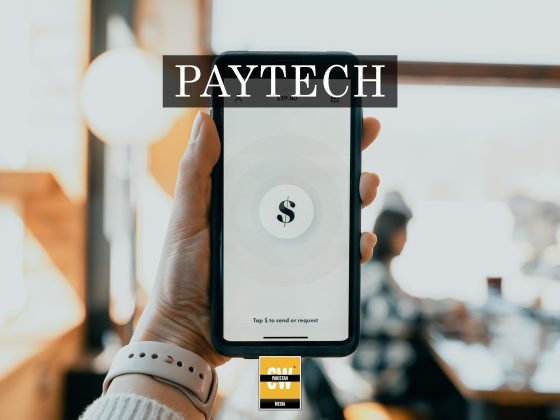
The software app developed by his company, Finja, will be linked to the users’ current account, letting them make transactions at a range of partner retail businesses using their smartphones. There will be no need of a debit card anymore, he says.
In Brief
- Financial technology or fintech firms are businesses that leverage technology to develop financial products and services. The major firms in this industry have been around since the early 1950s.
- Some of the earliest technology-enabled products and services offered were Automated Teller Machines (ATMs) and non-cash modes of payment using debit and credit cards. Industry insiders refer to these firms as traditional fintech firms because they develop products and services for commercial banks.
- Recent advances in information and communication technologies have facilitated the emergence of a new breed of fintech firms. These emergent firms are pioneering technology-enabled solutions on their own, rather than catering solely to the existing financial institutions.
The technology allowing smartphones to read barcodes (associated with bank account information) will enable them to be used as a replacement for debit or credit cards.
“Each user’s wallet is linked to a unique current account maintained at a partner bank and can be accessed through any smartphone that allows downloading an Android and iOS powered software application developed by his company,” says Shahid as he draws a flowchart on a transparent conference table, explaining his ideas about “disrupting the financial sector”. Facing his back, there is another conference table serving as a co-working space for a group of youngsters employed at his company.
Shahid’s venture has already signed up a few hundred businesses and around 25,000 users. It is a financial technology or fintech firm – businesses that leverage technology to develop financial products and services.
A 2016 PricewaterhouseCoopers (PwC) research study shows that there is an increasing interest among investors across the globe for the fintech sector. In 2015, funding for fintech startups more than doubled, reaching $12.2 billion from $5.6 billion in 2014. The study also contends that of all the various sub-sectors in financial industry, fintech firms are likely to have the most significant impact on consumer banking comprising services like current and savings accounts, disbursement of loans for non-commercial purposes, and transfer of funds.
Read more: With Global Trade Finance Gap at $1.5 Tr, a Third of Firms Studied Pin Hopes at Fintech
Fintech is not a new industry. The major firms in this industry have been around since the early 1950s. Some of the earliest technology-enabled products and services offered by these firms were Automated Teller Machines (ATMs) and non-cash modes of payment using debit and credit cards. Industry insiders refer to these firms as traditional fintech firms because they develop products and services for commercial banks.
In Pakistan, the use of ATMS and point of sale (POS) machines remains low compared to other countries in the region. In 2015, the World Bank calculated that there were 8.79 ATMs per 100,000 people in Pakistan, compared to 19.71 in India.
A study funded by Karandaaz Pakistan, a not-for-profit organisation, has found that there are 44,000 POS machines operational across the country. Seeding Innovation: A Framework for Rooting Fintechs in Pakistan study notes that the number of such machines recorded in other countries in the region with significantly lower populations is much higher (Turkey has a population of 78 million and number of POS machines operational there is 2.5 million, and Iran with a population of 75 million has 1.5 million POS machines).
However, the low penetration of ATMs and POS machines shows just one aspect of Pakistan’s financial sector and its potential for growth. The other aspect is linked to recent advances in information and communication technologies like the rise of broadband and wireless internet services and smartphone technology. These changes have facilitated the emergence of a new breed of fintech firms. These emergent firms are pioneering technology-enabled solutions for delivery of financial products and services on their own, rather than catering solely to the existing financial institutions.
The Karandaaz study suggests that with 32 million active internet users Ω 29 million of which access the internet through 3G/4G communication technology Ω and a third of its population in the youth age group, the country appears set to see growth of innovative financial products and services developed by emergent fintech firms, like the application made by Shahid’s company.
The Finja app lets users add money to their wallet from any current account. Since it is targeting a population segment already catered by a commercial banking sector dominated by a select few big players, the company has come up with an incentive structure to attract users: no fee on transactions made using the app. He says that one of the ways commercial banks make money is by charging their customers for transactions.
“Charging transactions is a foolish way of making money,” Shahid says. “We won’t charge a penny to the users no matter how many transactions they make,” he says. Instead, his company will make money through interest earnings on funds deposited by users in their current accounts at the partner bank and on loans it plans to provide to users at a later stage.
Smartphones for payments
Another innovative feature of digital payment platforms is that they allow interoperability between accounts maintained at different banks.
Hasnain Sheikh of Inov8, another fintech company, is set to soon launch Fonepay, a super application that also offers the use of smartphones to make payments – but at a larger scale. It doesn’t require users to transfer their funds deposited with existing commercial banks. Instead, Sheikh’s company is signing up banks as partners, alongside major businesses in the transport, retail, foods and beverages, entertainment sectors and utilities like electricity and telephone services and natural gas providers . He says 12 major banks are already on board as he demonstrates the various features available with the Fonepay app.